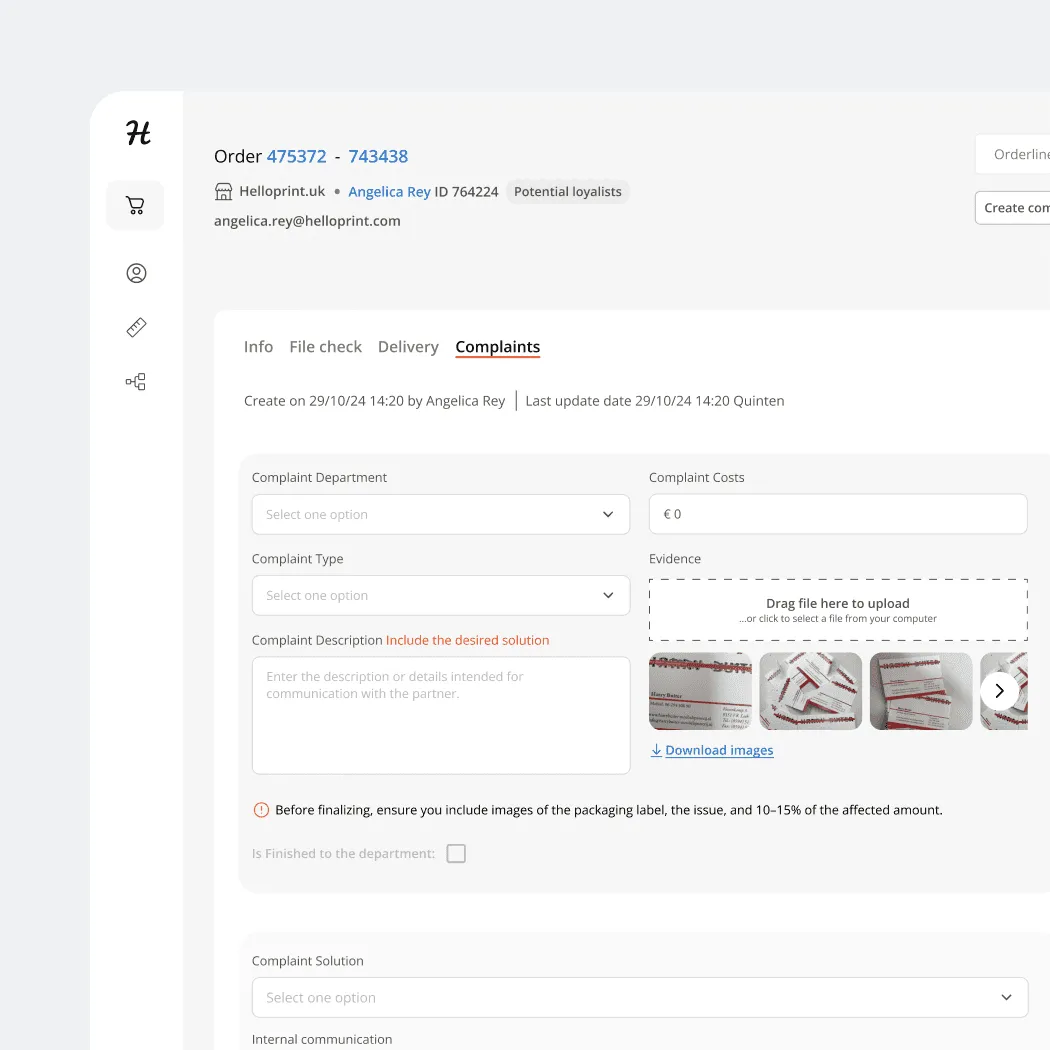
HelloPrint's refund process was entirely manual: agents submitted refund requests that went to a Team Lead for approval, with no validation rules enforced by the system. Errors such as wrong amounts, ineligible orders or duplicate refunds were caught only after the fact, if at all. I redesigned it to shift validation from human review to system-enforced rules.
The goal was not to remove human oversight, but to make it proportional to the level of risk. Routine refunds could follow a simple path, while cases requiring additional scrutiny could be identified and routed for review.
The flow was designed around the information already available to the system (the type of issue, order value, customer history and refund amount), so validation could happen before submission rather than after it.
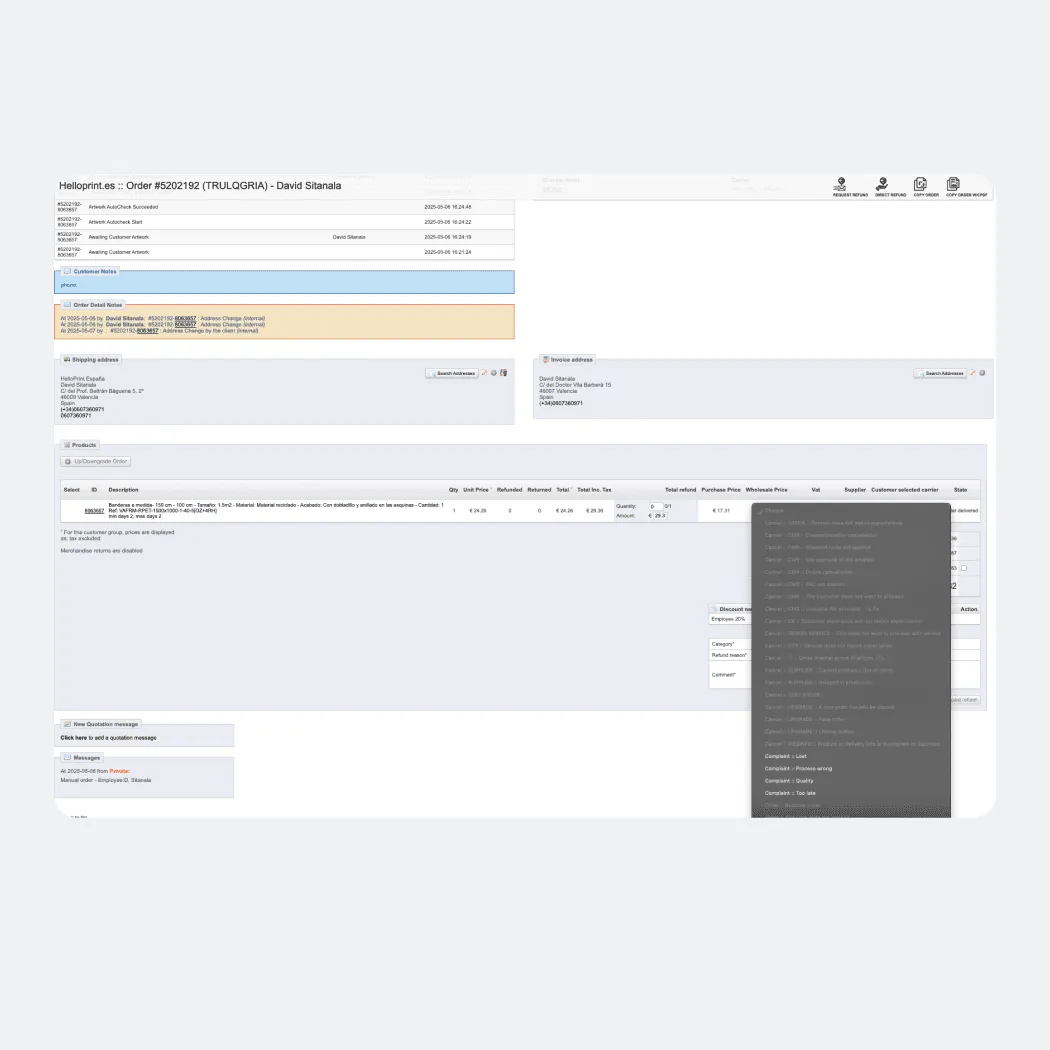
Legacy system (Presta): Request refund
As HelloPrint scaled, the refund volume scaled with it, but the review process didn't. Team Leads were spending an increasing portion of their time reviewing refund requests that the system should have been able to approve or reject automatically. Meanwhile, agents had no feedback on whether a refund was likely to be approved before submitting.
→ Validation should happen at the point of entry, not after submission. If the system knows an order is ineligible for a refund, it should say so before the agent submits, not after a Team Lead reviews it 24 hours later.
The redesigned refund flow adapts to the context of each request. The type of issue, order value, customer history and refund amount determine which validation steps are required and what approval threshold applies.
Routine refunds can be approved automatically, while higher-risk cases are routed to the appropriate approver. Every decision remains visible and traceable through the refund history.
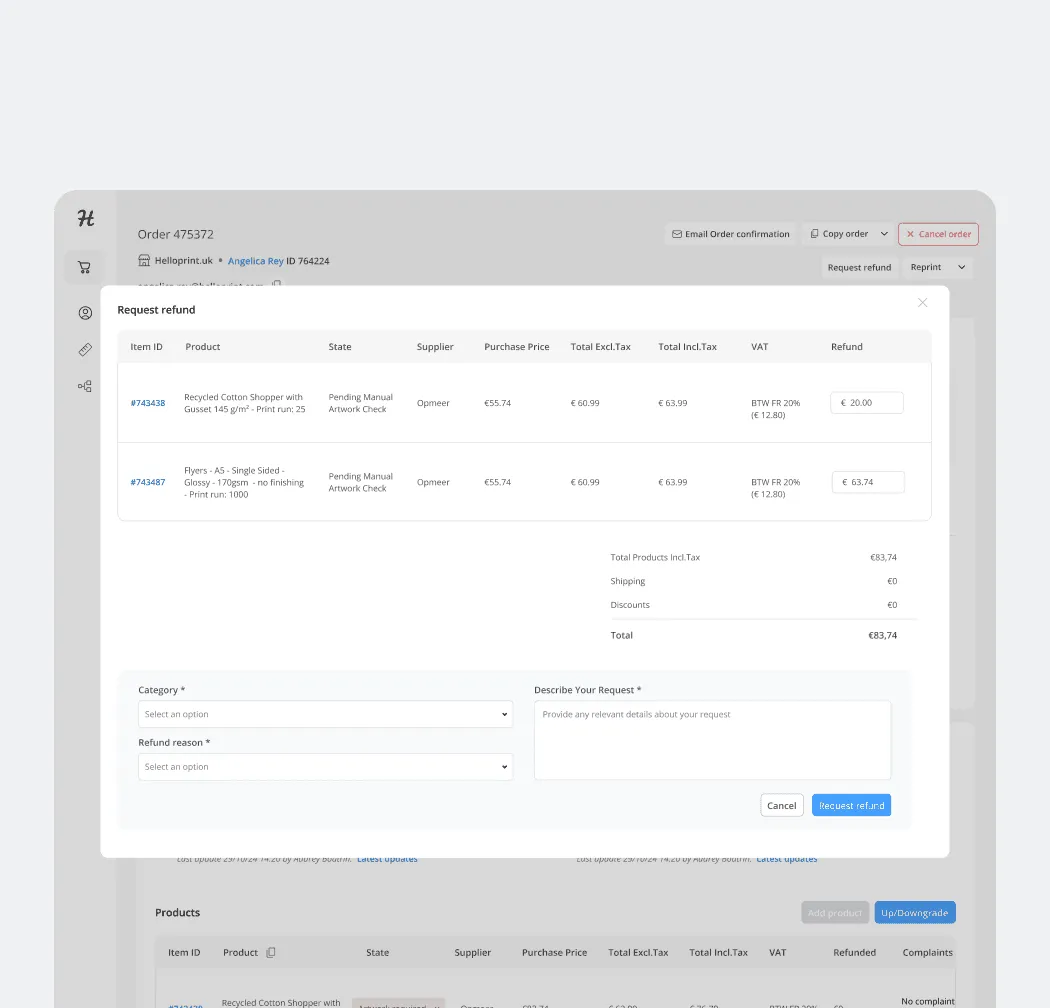
Guided refund request flow with built-in validations to prevent errors.
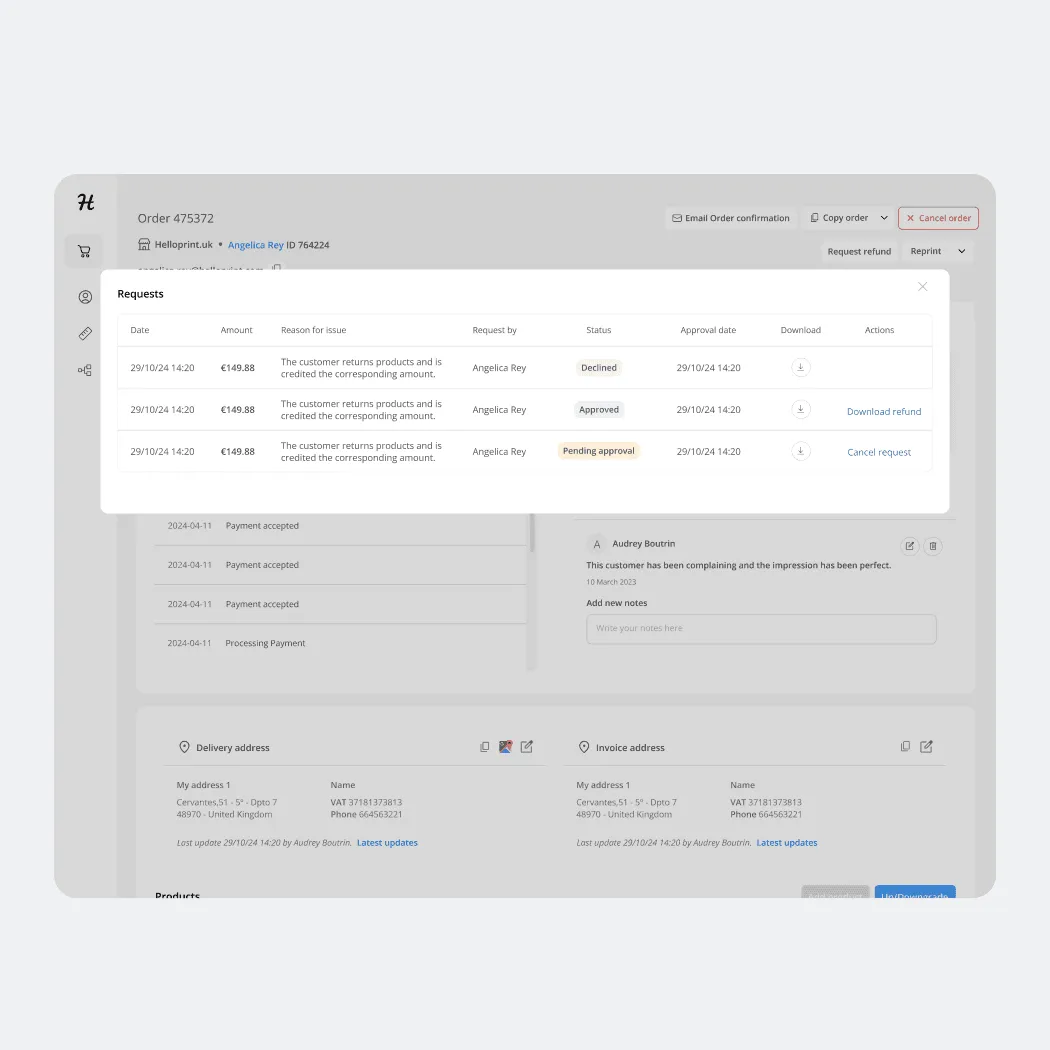
Clear overview of refund requests with status, actions, and key information.
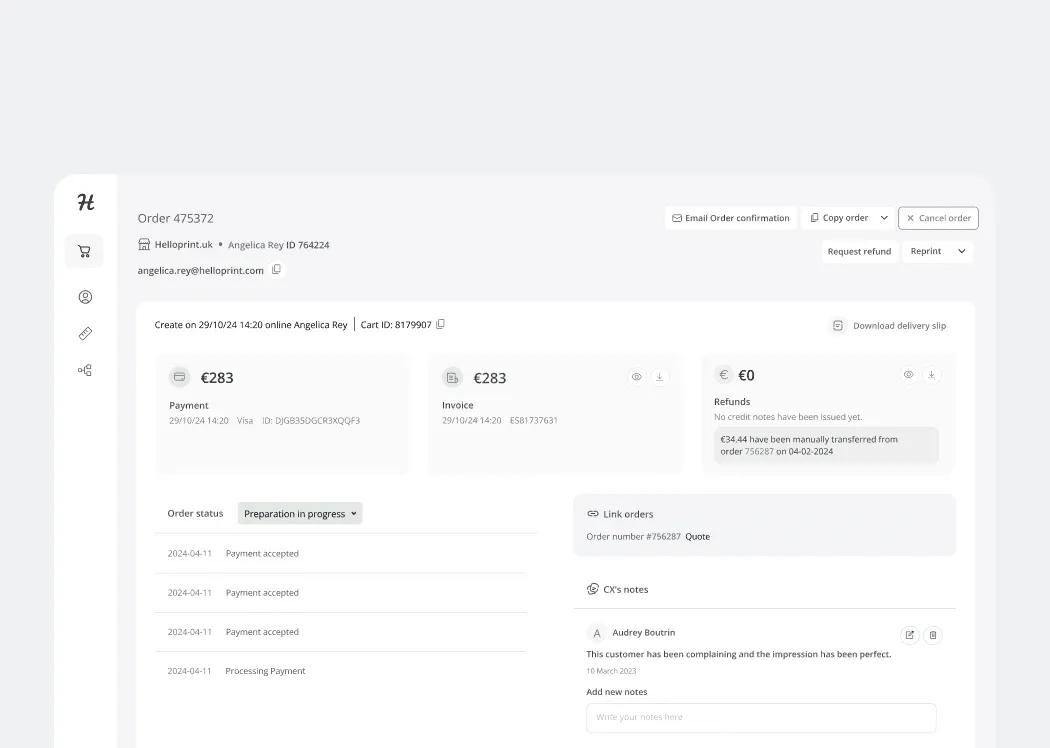
Improved traceability and visibility of fund transfers between orders.
The redesign moved responsibility from Team Leads to the system itself. Agents can now complete most refund scenarios independently, approvals are only required for high-risk cases, and the full audit trail (agent, date, amounts, linked orders) is visible at all times.