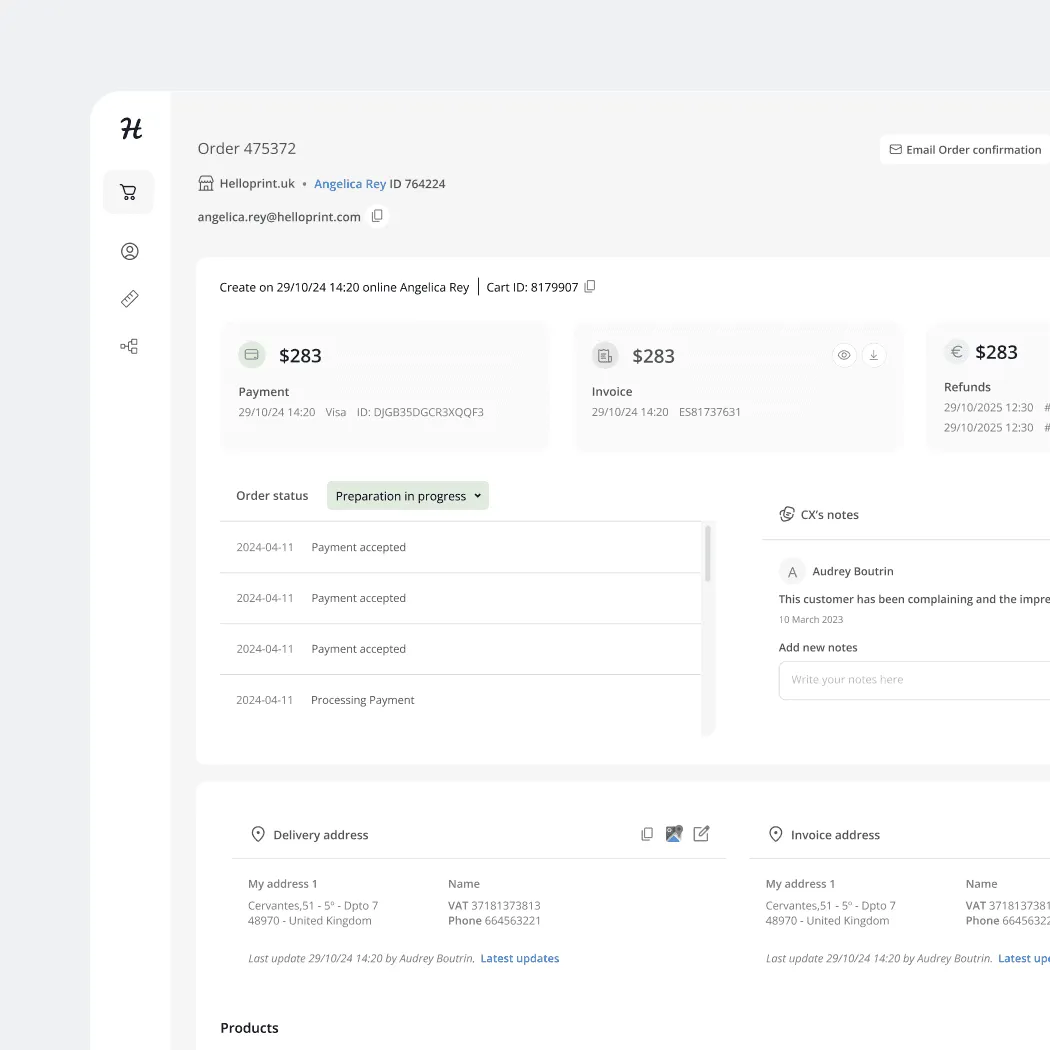
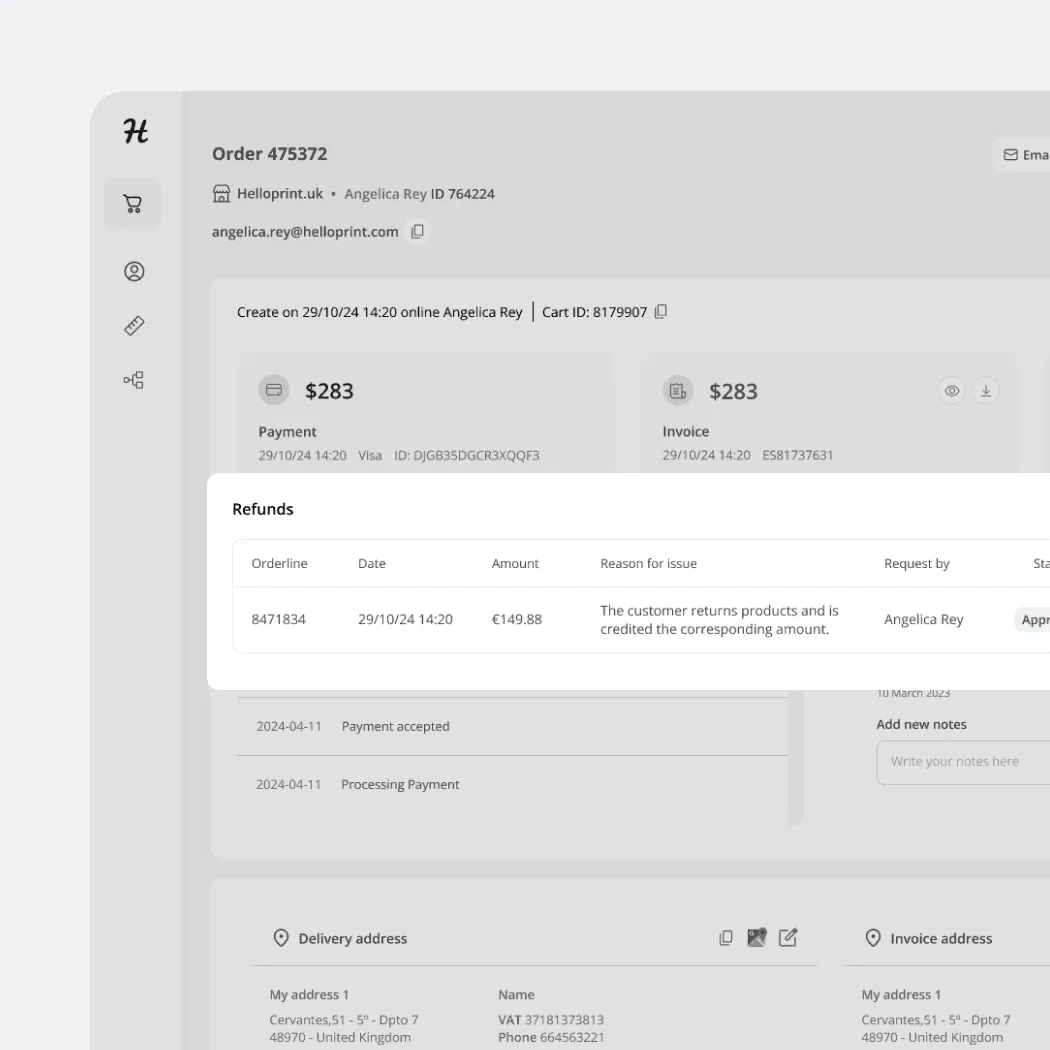
Complaint handling at HelloPrint was a time-consuming, error-prone process. Each product complaint required a separate submission, manual cross-referencing of order data and repetitive data entry, which made multi-product orders particularly painful to handle.
I set out to understand where the time was going and redesign the flow around the work agents actually needed to do.
The biggest problem wasn't creating a complaint itself. It was repeating the same work around it. For multi-product orders, agents had to submit each complaint separately, entering the same order and issue information again and again.
Before deciding what to redesign, I mapped the complaint flow to understand where that time was actually being spent.
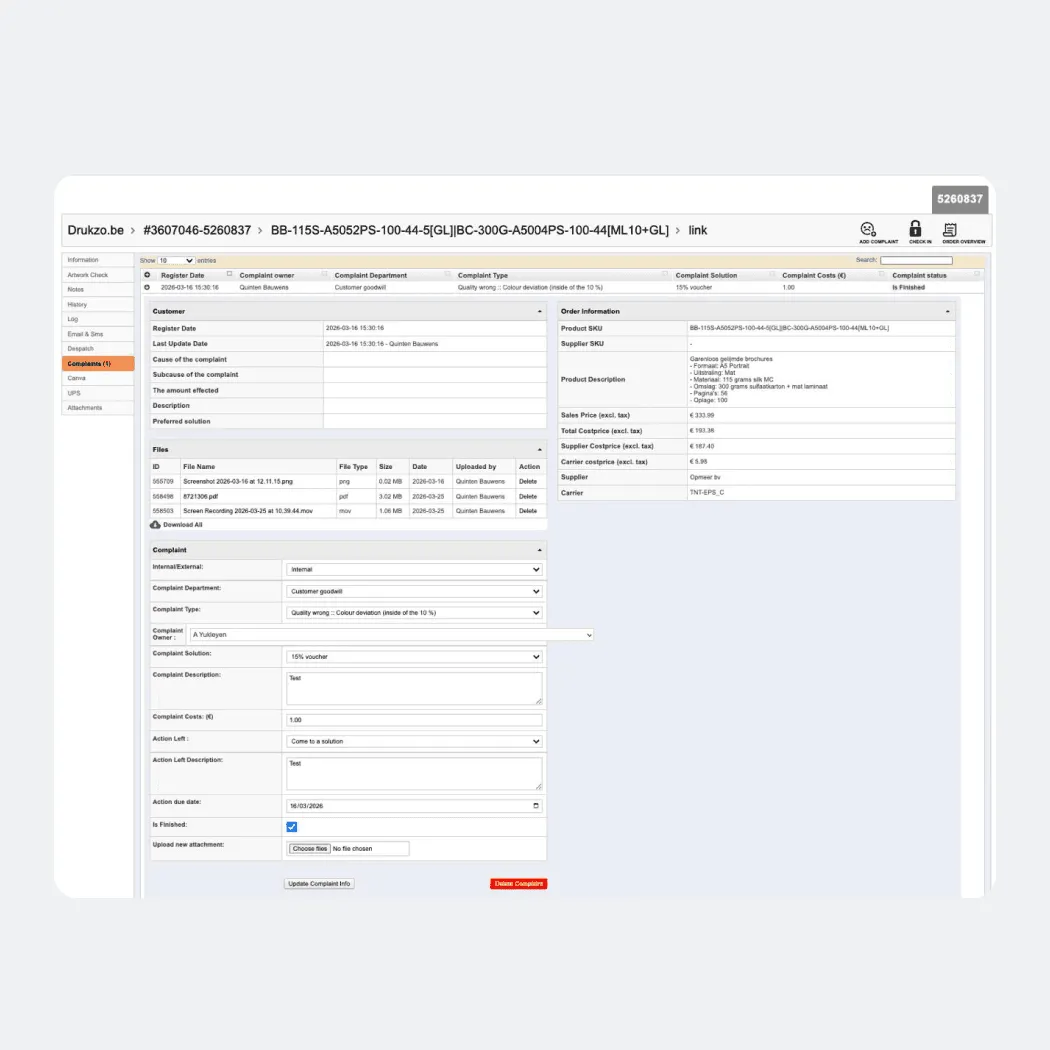
Legacy system (Presta): Complaint form
I shadowed 4 agents over 2 days, mapping every click, tab switch and manual action during complaint handling. The pattern was clear: 68% of complaint time was spent retrieving and re-entering data, not resolving the issue.
The workflow was forcing agents to repeat information the system already knew. Multi-product complaints amplified the problem because the same complaint had to be recreated for every affected product.
→ The redesign target was clear: eliminate data re-entry. If the system already knows the order, it should pre-fill the information. And when the same issue affects multiple products, agents should not have to repeat the same work.
The new complaint flow was designed around the two main sources of wasted time: data re-entry and repeated actions.
Order and product information is pulled in automatically, complaint types are structured through predefined classifications, and a complaint can be duplicated across multiple products in one action.
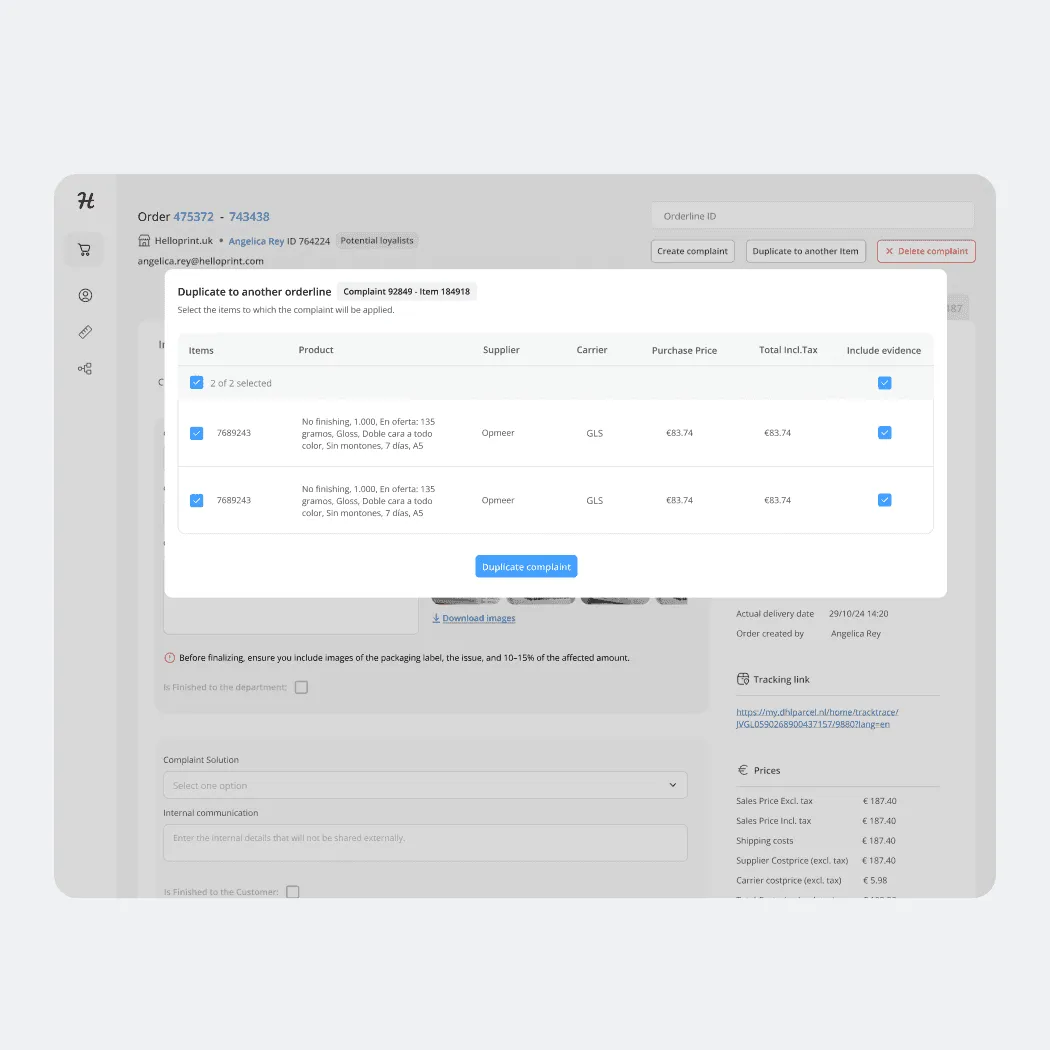
360 Platform: Complaint duplication
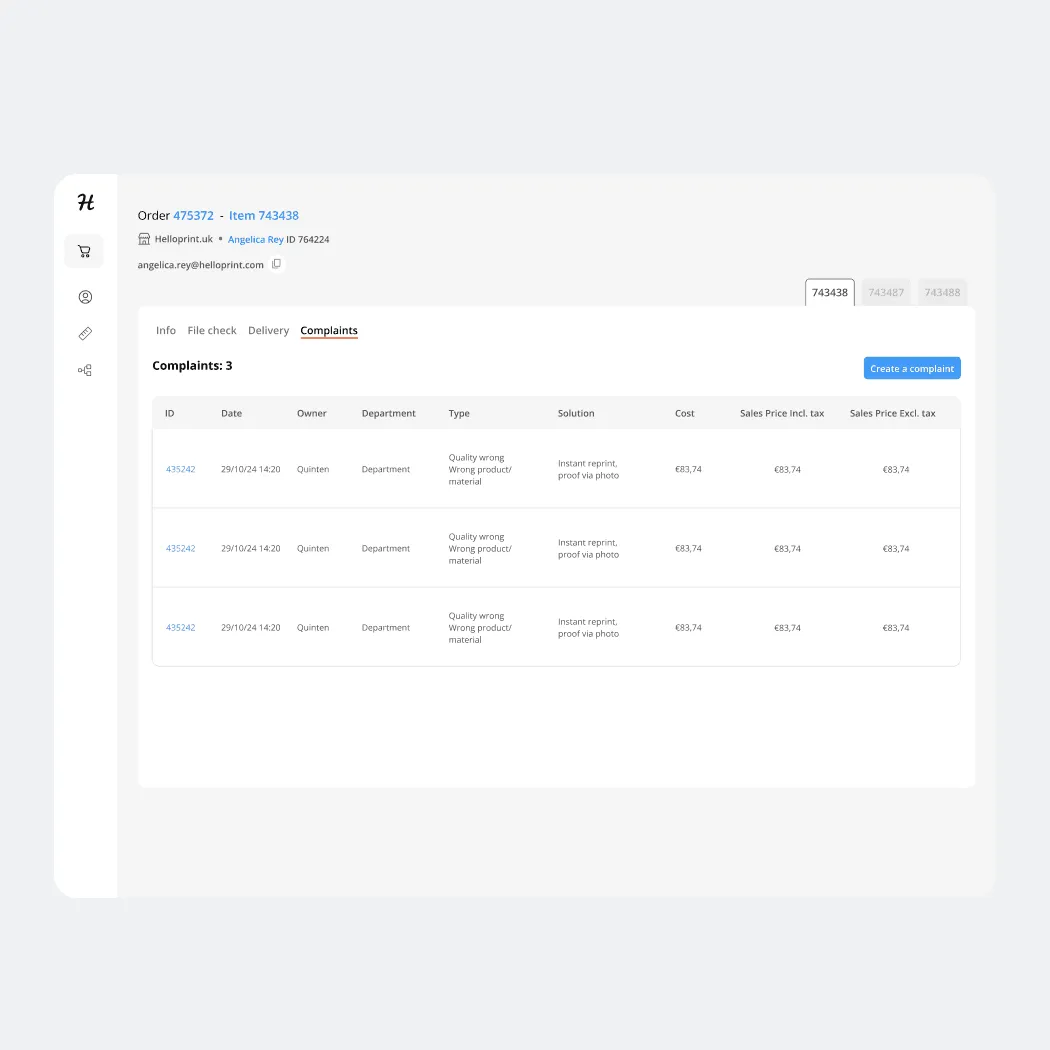
360 Platform: Complaints overview
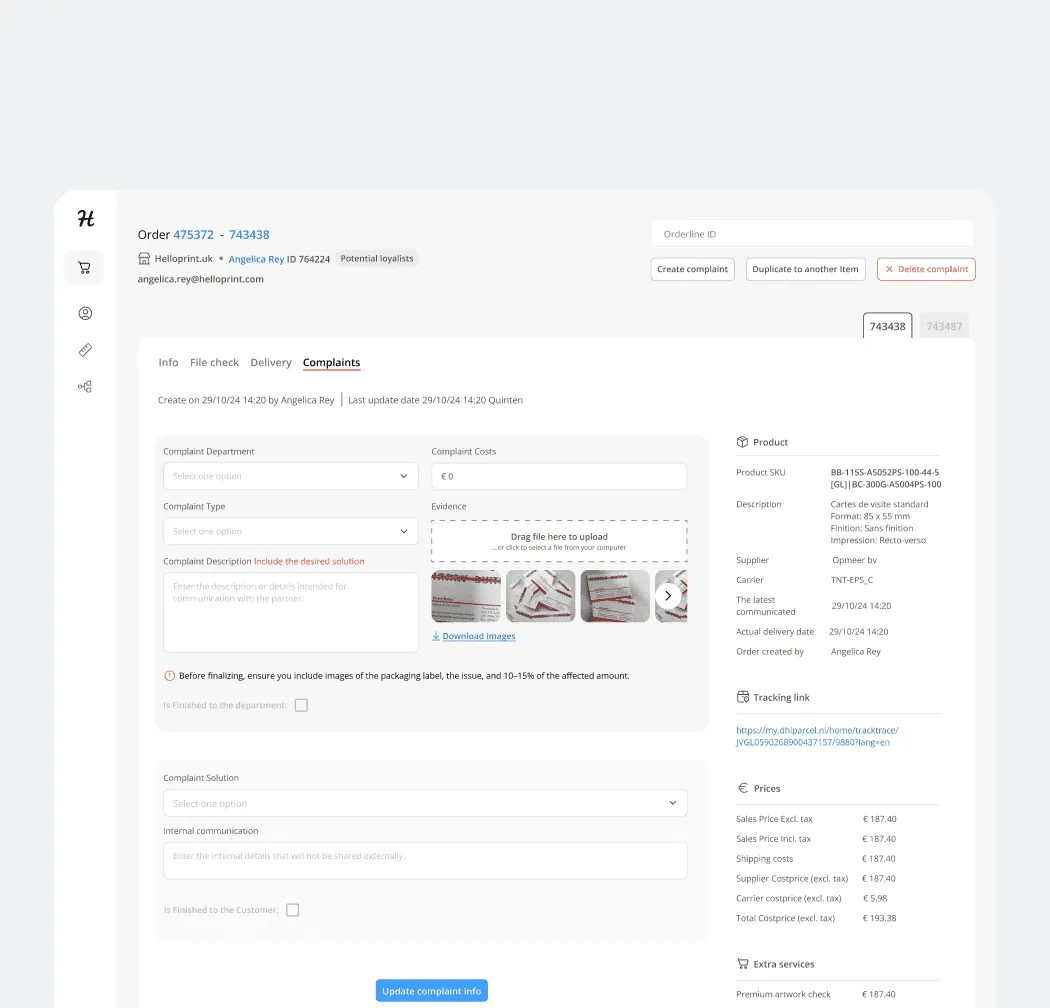
360 Platform: New complaint form
The redesign reduced complaint handling time from 5 to 3 minutes for single-product complaints and from 30+ to 10 minutes for multi-product complaints.
The structured classification system also turned complaint data into a usable product signal, revealing recurring issues that had previously been hidden in free-text responses and informing supplier quality conversations.